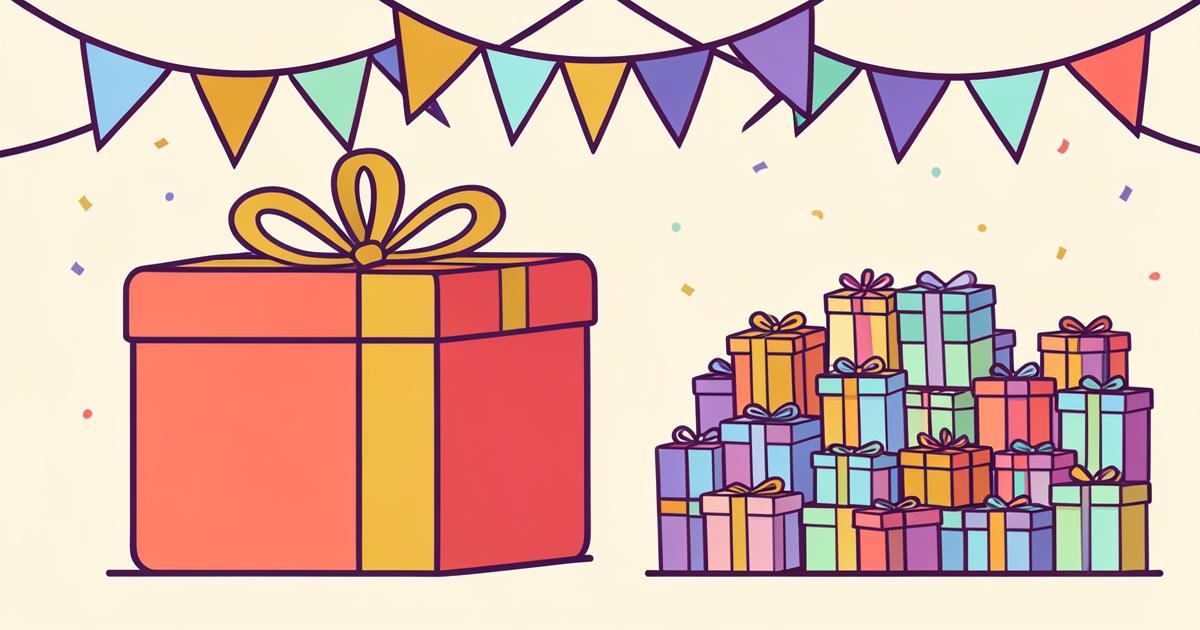
There is something lovely about a child opening birthday presents. There is also a point, usually somewhere around present number nine, where nobody can remember who gave what and the floor has disappeared under wrapping paper.
Neither approach is the correct one. A pile of presents is genuinely exciting, and for some children it's the best part of the day. But if you've ever spent the following Sunday finding homes for eleven small plastic things, it's worth knowing what actually changes when the gifts are pooled instead.
They can get something they really want
Twelve presents at ten or fifteen pounds each is well over a hundred pounds of goodwill. Split twelve ways it buys twelve reasonable presents. Pooled, it buys the bike, or the LEGO set that's been on the list since Easter, or the football boots in the right size.
Children notice that difference. A seven-year-old who has wanted one specific thing for months will remember getting it long after the party bags have gone.
Fewer unwanted or duplicate gifts
Classmates' parents are working with very little information. They know your child's first name, roughly what they're into, and nothing at all about what's already in the toy box. That's how you end up with two of the same craft set and a board game the family already owns.
It isn't anyone's fault. It's just guesswork, and guesswork produces duplicates.
Less plastic and packaging
One gift means one box, one lot of wrapping and one delivery rather than a dozen. That's the whole claim. It won't change the world, and it isn't a reason to do this on its own, but it's a small practical difference that a lot of parents quietly like.
Less overwhelm, for some children
Plenty of children thrive on a mountain of parcels. Others get halfway through, lose track and drift off to play with the first thing they opened. If yours finds a busy party enough stimulation on its own, opening one carefully chosen present later in the day can be a kinder end to it.
You know which of those your child is. Nobody else's opinion on this is worth much.
A gift that tends to last longer
The things families choose when the contributions are pooled are usually the things that stay in use:
- a bike or scooter
- the large LEGO or building set
- a gaming item that would otherwise be a birthday-and-Christmas-combined purchase
- football boots, a tennis racket or a proper set of art supplies
- tech or outdoor play equipment they'll use for more than a week
There's also no need to decide before the party. With a PartiGift, the contributions come in first and the collection is redeemed as an Argos e-gift card. The family can choose afterwards, once they know the total, rather than committing to a present and hoping the maths works out.
When lots of small presents is the better call
If your child loves the unwrapping, if the party is small enough that pooling wouldn't add up to much, or if the whole thing would cause more conversation than it saves, keep it traditional. Nobody is doing birthdays wrong by handing over a wrapped present.
This is one option among several, and it suits some families and some years and not others. The same child might want a pile of parcels at five and one specific thing at nine.
How to actually raise it
The mechanics are simple enough: how PartiGift works covers it in three steps. The harder part is the wording, which is where most parents hesitate. If that's the bit stopping you, read is it rude to ask parents to chip in? first, and spare a thought for the parent on the other end of the invitation. They're usually the ones most relieved.